Beyond the Table: America's Most Privileged Diners Have Left the Restaurant Behind
Consider, for a moment, what a Michelin star actually represents. It is, at its core, a mark of consistency — a certification that a kitchen will deliver a defined experience reliably, night after night, to whomever secures a reservation. For the overwhelming majority of serious diners, this is enormously valuable. But for a small and quietly influential cohort of Americans, consistency is precisely what they are no longer seeking.
They have dined at the celebrated tables. They have worked through the tasting menus, the wine pairings, the choreographed service. And while they retain genuine appreciation for those achievements, they have arrived at a different appetite entirely — one that cannot be satisfied by any establishment, however decorated, that must serve two or three hundred covers per week.
What they seek now is something the restaurant industry, structurally, is incapable of providing: a meal conceived and executed for them, and them alone.
The Private Chef Renaissance
The private chef has existed as a profession for as long as there have been households wealthy enough to support one. What is notable about the current moment is the caliber of culinary talent now choosing this path — and the sophistication of the clientele drawing them there.
A generation ago, the most ambitious young chefs in America aspired almost universally to restaurant stardom. Today, a meaningful number of the country's most gifted culinary minds are building careers entirely outside the public dining ecosystem, serving rosters of private clients who offer something no restaurant can: complete creative latitude, generous compensation, and the singular satisfaction of cooking for people who are paying close, personal attention.
"In a restaurant, even a great one, you are always cooking for an abstraction," explains one private chef based between New York and the Hamptons who previously held positions at two three-Michelin-starred establishments. "You imagine the diner, but you rarely know them. When I cook for my clients, I know their palate histories, their travel experiences, the meals that have moved them. I can reference all of that in a single dinner. That is an entirely different creative act."
The resulting meals can be extraordinary in ways that resist easy categorization. A dinner conceived around a client's recent travels through Oaxaca, with ingredients sourced directly from producers encountered on that journey. A winter tasting menu built around a family's generational relationship with a particular Northern California valley, incorporating foraged and farmed ingredients from that specific landscape. These are not dishes that could appear on any printed menu — they are, in the most literal sense, bespoke.
The Underground Supper Club and the Geometry of Exclusivity
Beyond the private household, a more structured — though equally opaque — world of invitation-only dining has taken root in several major American cities. These are the underground supper clubs and private dining collectives that operate entirely outside the conventional hospitality infrastructure: no Resy listing, no Yelp page, no press outreach.
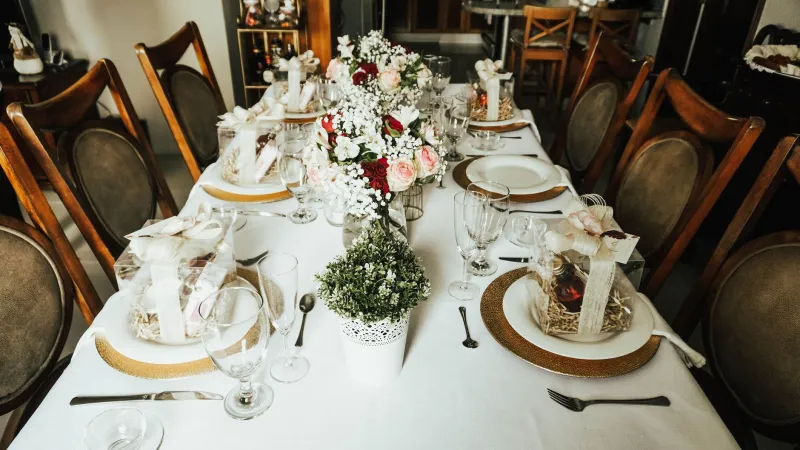
In New York, Los Angeles, San Francisco, and Chicago, a network of these gatherings convenes regularly in private lofts, converted industrial spaces, and occasionally in the dining rooms of members' own homes. Entry is managed through personal introduction and, in some cases, a formal vetting process not entirely unlike that of a private club. The guest lists are deliberately small — rarely more than twelve to sixteen diners — and the culinary experiences offered range from focused single-ingredient explorations to elaborate multi-act productions that unfold over four or five hours.
What unites these disparate events is a shared rejection of the restaurant's fundamental premise: that dining is a service transaction. In the supper club model, the meal is framed as a shared cultural experience — closer in spirit to a private concert or gallery opening than to a night out.
"The people who come to our gatherings are not looking for a meal," says the organizer of one long-running New York collective who agreed to speak on condition of strict anonymity. "They are looking for a conversation — between the chef, the ingredients, the space, and the other guests. The food is the medium, not the product."
Curated Destinations and the Geography of Taste
For those whose means permit a more expansive approach, the bespoke culinary experience has taken on a distinctly geographical dimension. A growing number of affluent Americans are organizing travel — sometimes internationally, often domestically — around access to a single chef, a specific ingredient at its peak, or a culinary tradition they wish to understand at depth.
This might manifest as a private weeklong stay at a working ranch in Montana, with a James Beard-nominated chef in residence cooking through the full range of the property's harvest. Or an extended visit to a Napa Valley winery that offers, to a very limited number of guests per year, a private table experience in the barrel cave — a meal paired with wines that will not be released for another decade. Or, increasingly, a collaboration with a chef who specializes in sourcing experiences: a private fishing day off the Maine coast followed immediately by dinner composed entirely of that morning's catch, prepared in a client's summer home.
The common thread is immediacy — a compression of the distance between source and table that no urban restaurant, however committed to its supply chain, can fully replicate.
Why the Finest Meal You Will Never Read About May Be the Best One
There is a certain irony in the fact that the most remarkable culinary experiences available in America today are, by design, invisible to the food media ecosystem that ostensibly exists to chronicle such things. No critic will review them. No influencer will photograph them. They exist in the memories of a small number of people and in the notebooks of the chefs who created them.
For the diners who inhabit this world, that invisibility is not a limitation — it is the point. The meal that cannot be Instagrammed, cannot be replicated by the next reservation holder, and was never intended for any palate but yours is, in the end, the rarest thing the culinary world can offer.
In an age when even the most exalted restaurant experiences are catalogued, compared, and contested in real time, the truly exceptional meal has retreated entirely from public view. It is served quietly, in private, to those who have learned that the most refined pleasures are seldom the ones on display.