The Itinerary of Idleness: How America's Elite Turned Relaxation Into a Managed Asset
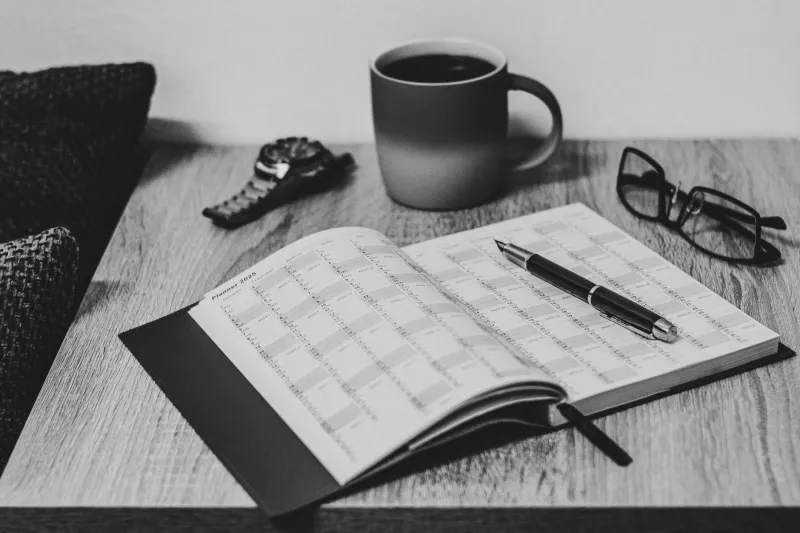
There is a particular kind of calendar entry that has quietly become a status marker in certain ZIP codes across America. Not a board meeting, not a foundation dinner — but a block labeled, with complete sincerity, Unstructured Reading: 3:00–4:15 p.m.
Among the country's wealthiest households, leisure has undergone a transformation that would have baffled earlier generations of the rich. Where old money once prized the effortless afternoon — the long lunch, the unscheduled round of golf — today's affluent are managing their downtime with the same rigor they apply to a portfolio review. Free time, it turns out, does not survive contact with modern life unless it is engineered to.
The Rise of the Lifestyle Architect
Ask around the Hamptons in July or Aspen in February and you will eventually hear the term lifestyle architect — a professional whose job is not to plan work, but to plan the absence of it. These consultants, often drawn from executive-assistant ranks or hospitality backgrounds, build what one New York practitioner calls "recovery itineraries": quarter-hour increments covering everything from a 4:00 p.m. cold plunge to a 6:30 p.m. window reserved for "aimless walking."
The client, typically a founder or fund principal, may never see the schedule in its granular form. They simply experience the outcome — an afternoon that feels spontaneous because someone else made it so.
"My clients don't want a free Saturday," one planner explained. "They want the sensation of a free Saturday, delivered on time."
Why Rigor Replaced Rambling
The economics are only half the story. For executives whose calendars are contested territory — claimed by boards, investors, family offices, and the low-grade emergency of the always-open inbox — unstructured time is structurally doomed. If a two-hour window exists without an owner, it will be allocated by someone. Better, the reasoning goes, that it be allocated by you, in advance, to something restorative.
There is also a subtler psychological driver. Many of the ultra-successful reached their position through an almost pathological relationship with optimization. Asking them to simply drift through an afternoon is like asking a concert pianist to play with fists. Structured leisure meets them where they are: it converts rest into a task, and tasks are something they know how to excel at.
The result is the phenomenon now visible across affluent America: the private chef booked by the quarter-hour, the meditation session that appears on a shared family calendar, the vacation with a chief of staff on-site to ensure nothing feels unplanned.
The Counter-Movement
Yet a vocal minority is pushing back. In certain circles — particularly among second-generation wealth and the tech cohort that grew up inside algorithmic schedules — unbooked time has become the rarer, more envied commodity. The truly secure, this argument runs, are those who can let a Saturday afternoon collapse into nothing without professional intervention.
Some lifestyle architects now bill for what they call "negative scheduling": the deliberate defense of empty hours, complete with protocols for what to do when a client instinctively tries to fill them.
"The hardest assignment I ever had," one consultant admitted, "was a client who asked me to make her feel bored again. She hadn't been bored since 2009. It took eleven months."
The Last True Luxury
Whether engineered or defended, the underlying truth is the same: for Americans who can purchase nearly any experience on demand, the scarce resource is no longer pleasure but unclaimed time — hours that belong to no agenda, no optimization, no one.
The wealthiest class in the nation is thus engaged in an ironic experiment: buying back, hour by managed hour, the very idleness their success destroyed. Whether that idleness retains any meaning once it appears on a calendar is a question the leisure class has not yet answered.
Perhaps the honest conclusion is that spontaneity, like wilderness, can no longer be found — only reserved. And in that reservation lies the peculiar melancholy of modern affluence: a people rich enough to schedule anything, still searching for the one thing that refuses to be scheduled.