Five Days of Nothing: The Ascetic Retreats Where America's Rich Pay to Have It All Taken Away
The building does not look like a retreat. It looks like a monastery that hired a Pritzker laureate and then asked for less.
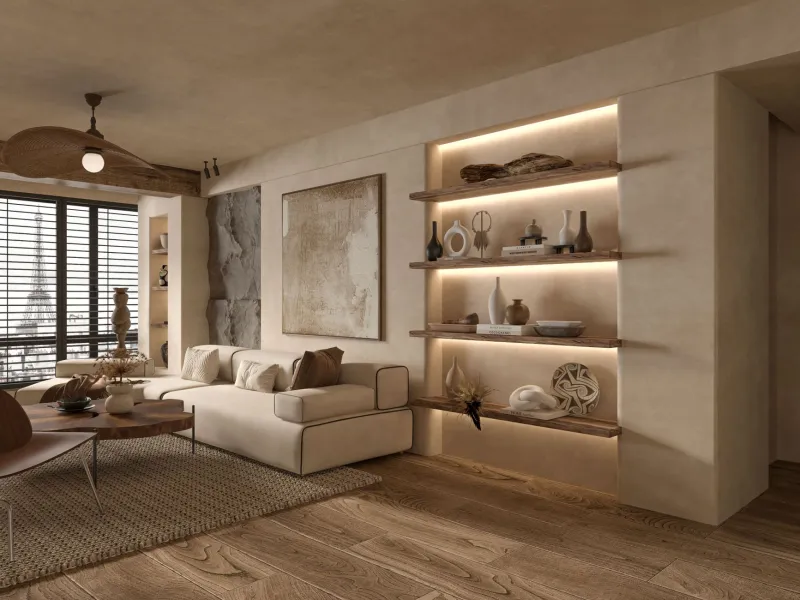
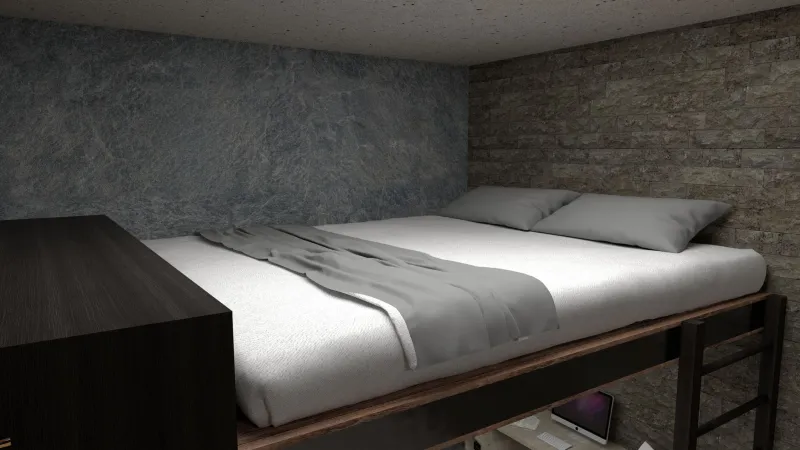
The spaces are stripped to essentials: raw plaster walls, a single wooden bed, a window positioned not for a view but for light. There are no televisions, no artwork, no decorative objects — nothing for the eye to acquire. Guests arrive, surrender their phones and their watches, and receive two sets of undyed linen. For the next five days, that is the entire inventory of their lives.
The cost begins at several thousand dollars per person.
The Architecture of Absence
What distinguishes these austerity retreats from ordinary wellness getaways is that the design itself is the program. Where a typical luxury spa adds — treatments, amenities, curated experiences — the ascetic retreat subtracts. Rooms are small because smallness is the point. Corridors are plain because plainness is the treatment. In the most sought-after facilities, architects speak of designing for what they call "sensory honesty": materials that make no demand, light that changes only with the sun, acoustics tuned to amplify the sound of one's own breathing.
It is, in effect, the inverse of the trophy house. The same clientele commissioning twelve-bathroom estates in Wyoming or glass towers above Manhattan is quietly booking rooms with a bed, a chair, and a bowl.
Why the One Percent Wants Less
The psychology is not hard to locate. For individuals whose entire adult lives have been an exercise in acquisition — companies, properties, collections, options — the one experience unavailable at any price is the feeling of not having. Wealth insulates. It removes friction, ambiguity, discomfort. It also, guests report with startling consistency, removes something essential: the sense of being a person rather than a portfolio.
The retreat restores friction artificially. Without a phone, time thickens. Without a mirror, self-consciousness fades into something older. Without a menu, hunger becomes an event rather than an inconvenience. Guests describe the third day as the hinge — the moment the deprivation stops performing and starts working.
"I've closed two companies and a marriage," one returning guest said. "Nothing has ever scared me like a Tuesday with no watch."
The Uncomfortable Paradox
Critics are not wrong to notice the irony. A program of voluntary poverty, priced beyond the reach of most Americans, is a contradiction dressed in linen. There is something darkly comic about a billionaire sitting cross-legged on a bare floor, having paid the equivalent of a year's rent for the privilege.
But the deeper story may be less about hypocrisy than about hunger. The retreat sells exactly what the market cannot otherwise deliver: consequence, constraint, the sensation of a life pared to its load-bearing walls. In a culture where every desire is met before it is fully formed, unmet desire has become the rarest commodity of all.
Whether five days of nothing can permanently recalibrate a life of everything is doubtful, and the retreats themselves make no such claim. They promise only the interval — the brief, expensive window in which a person of enormous means gets to feel, for once, entirely unencumbered by it.
That this is now a growth industry says something about wealth. That the waiting lists run months says something about everyone else.