The Eloquence of Empty Space: How America's Most Refined Homeowners Are Discovering That Less Speaks Louder Than More
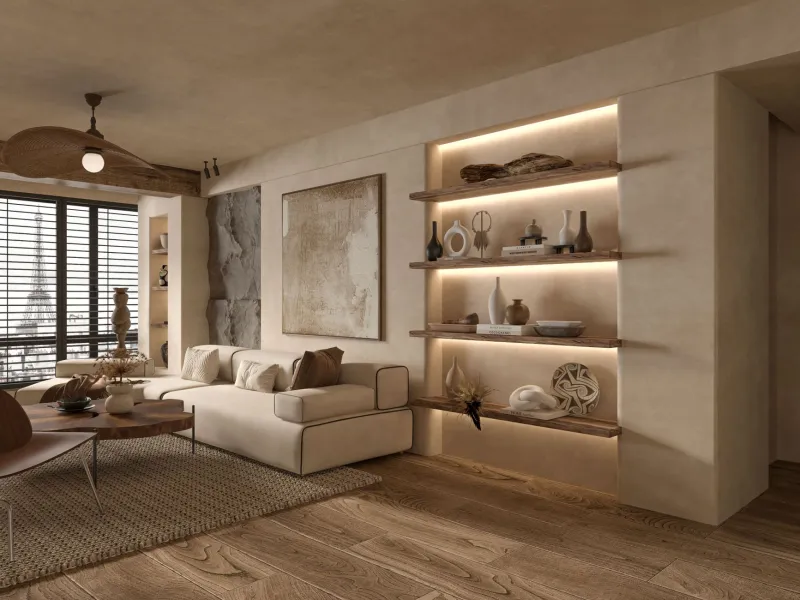
There is a particular kind of room that announces itself before a single word is spoken. Not through grandeur or spectacle, but through its very stillness — a quality so deliberate, so precisely calibrated, that it registers almost as a physical sensation. The air seems to hold its breath. Your attention, stripped of competing demands, settles into something approaching clarity. This is the room that America's most discerning homeowners are now commissioning, curating, and, perhaps most tellingly, defending against the persistent temptation to fill.
The movement toward what designers and collectors alike have begun calling acoustic luxury — spaces whose sophistication is expressed through restraint rather than accumulation — represents one of the more philosophically interesting shifts in American residential design in recent memory. It is, at its core, a rejection of the idea that wealth announces itself through visible density. And it is reshaping how the country's most accomplished individuals think about the rooms in which they live.
The Grammar of Restraint
To understand the appeal, it helps to consider what came before. The maximalist interiors that defined aspirational American living through much of the late twentieth century were, in many respects, a form of biography rendered in objects. Every surface told a story. Every wall competed for attention. The cumulative effect was often one of impressive vitality — but also, eventually, of exhaustion.
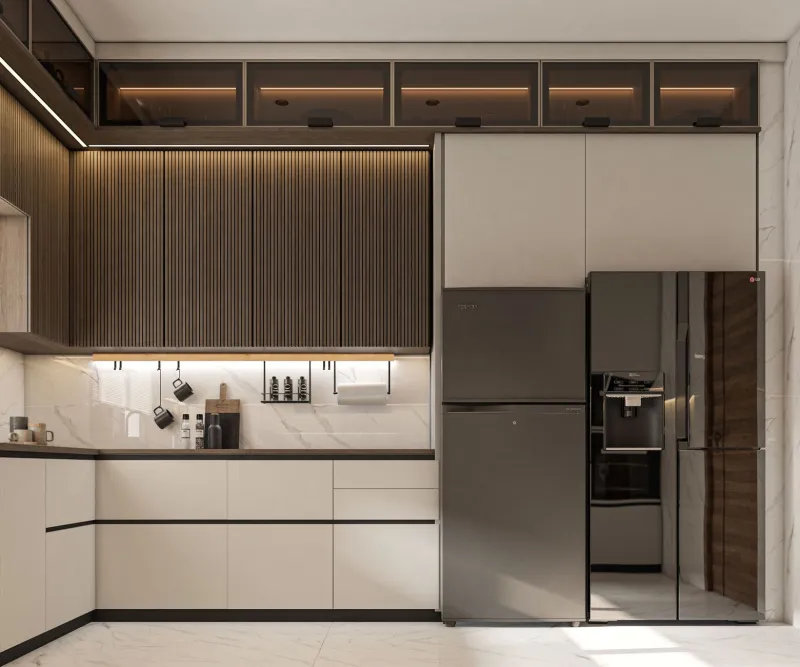
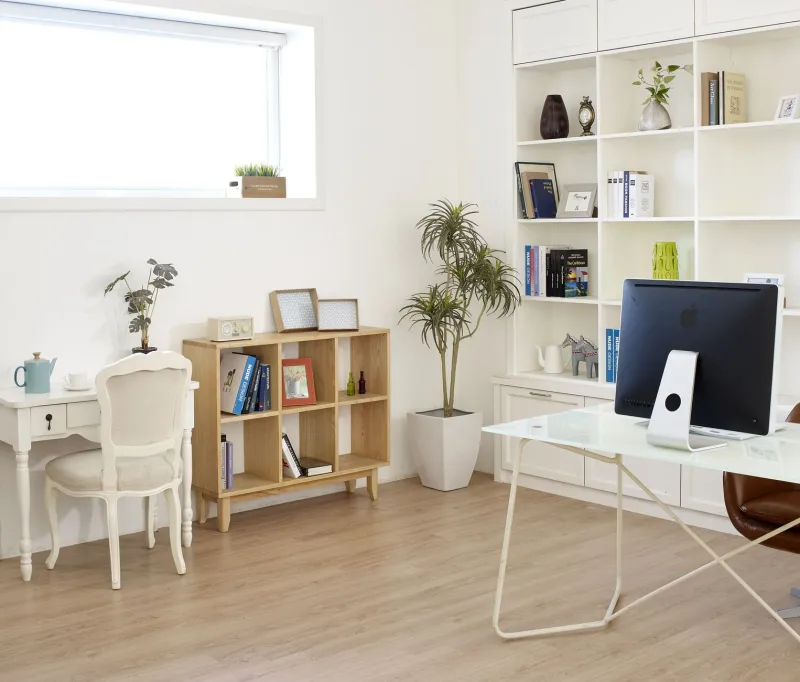
The interiors now emerging from the studios of designers such as Rafael de Cárdenas, Workstead, and Commune Design speak an entirely different grammar. Here, a single sculptural vessel on an otherwise bare console becomes a statement of extraordinary precision. A living room anchored by one exceptional artwork — surrounded by generous stretches of wall left entirely unadorned — communicates a level of curatorial confidence that no crowded gallery wall can approximate.
"The clients who are most interesting to work with right now are the ones who have already acquired everything," observes one prominent New York-based interior architect whose client roster spans Manhattan penthouses and Hamptons estates. "They've moved past the phase of collecting to demonstrate. Now they're editing to reveal — and that requires a completely different kind of courage."
Negative Space as Cultural Capital
In architectural theory, negative space refers to the deliberate voids that give form to the positive elements surrounding them. In the context of residential design, it has acquired an additional dimension: it has become a form of cultural signaling so refined that only those with a sufficiently developed aesthetic literacy can fully decode it.
A room that appears, to the uninitiated eye, to be merely spare or even unfinished is, to the trained observer, communicating volumes. The precise height at which a single shelf is mounted. The proportion of floor left bare relative to the area occupied by furniture. The decision to hang nothing at all in a room whose proportions would conventionally demand something. Each of these choices reflects not absence of taste but its most concentrated expression.
This is not minimalism in its ascetic, ideological sense — the hair-shirt aesthetics of a design philosophy that privileges denial as a virtue. The spaces being created for America's most accomplished homeowners retain every element of material luxury: the hand-plastered walls in tones mixed to a proprietor's precise specification, the custom millwork executed in book-matched walnut, the area rugs woven in workshops that accept commissions measured in years rather than months. The difference lies in what surrounds these elements. And what surrounds them, increasingly, is nothing — or rather, the kind of nothing that has been very carefully made.
The Psychology of the Considered Void
Beyond aesthetics, there is a compelling psychological dimension to this shift. Researchers in environmental psychology have long documented the cognitive and emotional costs of visual complexity — the way cluttered environments elevate cortisol levels, fragment attention, and impede the kind of sustained, deep thinking that high-performing individuals most depend upon. For those whose professional lives demand extraordinary mental precision, the home has taken on a new function: not merely as a place of rest but as an instrument of cognitive restoration.
"I think of the rooms I design now as a kind of decompression chamber," says a Los Angeles-based designer whose practice has increasingly focused on estates in Bel Air and Santa Barbara. "My clients are making decisions of enormous consequence all day long. When they come home, they need an environment that doesn't ask anything of them visually. The emptiness isn't decorative. It's functional."
This perspective reframes the economics of restraint in instructive ways. The empty wall is not a failure of investment but an investment of a different order — one whose returns are measured in mental clarity, emotional equilibrium, and the particular pleasure of inhabiting a space that responds to the full register of one's sensibility.
The Collector's Paradox
Perhaps nowhere is this tension more productively expressed than in the homes of serious collectors — individuals who have spent decades and considerable fortunes assembling works of exceptional quality, only to arrive at the conclusion that the most powerful way to honor those works is to show fewer of them.
The practice of rotating collections — displaying a small selection of works at any given time while the remainder rests in climate-controlled storage — has become increasingly common among the country's most sophisticated private collectors. Far from representing a failure of display, the rotation itself has become a form of connoisseurship: evidence that the collector's relationship to their collection is dynamic, considered, and entirely free from the anxiety of needing to show everything at once.
In some of the most admired private residences in cities such as San Francisco, Chicago, and New York, entire rooms have been designed around a single work — not the largest or the most commercially significant piece in a collection, but the one whose particular qualities of light, scale, or emotional resonance reward extended contemplation. The room, in effect, becomes the frame. And the frame, in this context, is a statement of the most refined kind of ownership: not possession for its own sake, but stewardship in the fullest sense of the word.
The Sound of Sophistication
There is a useful analogy, often cited by designers working in this mode, that draws on the world of music. The most moving passages in great compositions are frequently not the most densely scored. A sustained single note in a high register, surrounded by silence, can carry more emotional weight than any fortissimo passage. The pause before resolution is often where meaning lives.
The rooms being designed for America's most discerning homeowners operate on precisely this principle. They are, in the most literal sense, spaces that whisper — and in doing so, demand a quality of attention from their inhabitants that louder environments never could. To enter one is to understand, almost immediately, that sophistication has nothing to do with volume.
In a culture that has spent decades equating luxury with abundance, this is, perhaps, the most radical proposition of all: that the most eloquent thing a room can do is leave something out.