The Grace of Letting Go: Why America's Wealthiest Tastemakers Are Trading Ownership for the Rarer Art of Impermanence
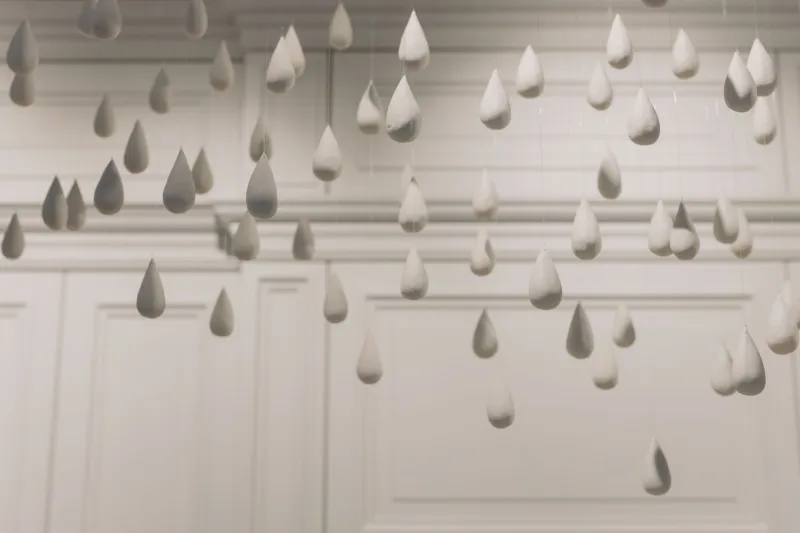
For generations, the architecture of American affluence was built upon a single, unambiguous principle: to collect is to possess, and to possess is to prevail. The great private galleries of Newport and the trophy-laden penthouses of Manhattan's Upper East Side told the same story—that cultural authority was measured in square footage and provenance documents. Yet something has shifted, quietly and profoundly, among the nation's most sophisticated collectors. The conversation has turned, and it has turned toward impermanence.
Across private estates in Marin County, townhouses in Georgetown, and lakefront retreats in the Adirondacks, a new philosophy is taking hold. The individuals who once competed fiercely at Christie's and Sotheby's for permanent acquisition are now, with equal deliberateness, choosing a different form of engagement—one defined not by ownership, but by the elevated experience of temporary encounter. They are lending masterworks to institutions, commissioning site-specific installations designed to dissolve, and arranging intimate private exhibitions that exist for days rather than decades.
This is not minimalism by necessity. It is a considered, even radical, act of aesthetic philosophy.
The Burden That Comes With the Frame
To understand the appeal of impermanence, one must first reckon honestly with what permanent ownership demands. A significant private collection—particularly one built around major works—carries obligations that extend far beyond the financial. Climate control, conservation specialists, insurance premiums that rival small institutional budgets, security infrastructure, and the quiet psychological weight of stewardship: these are the invisible companions of every prized acquisition.
For a certain generation of collector, these burdens were gladly accepted as evidence of commitment, even devotion. For the generation now emerging into cultural prominence, however, the calculus has shifted. Several prominent collectors in New York and Los Angeles have spoken—carefully, without attribution—about the moment they realized that their collections had, in some imperceptible way, begun to own them rather than the reverse.
The philosopher and art critic Arthur Danto once observed that an artwork changes the moment it enters a private home, acquiring a new context that is inseparable from its meaning. What he did not fully explore was the inverse: that the collector, too, is changed by the work, and not always in ways that serve the original impulse toward beauty.
Lending as a Refined Language of Prestige
Among those who have moved toward experiential collecting, the practice of lending to major institutions has emerged as one of the most eloquent expressions of this new sensibility. When a collector places a significant work—a Rothko, a Kara Walker, a Richard Serra—on long-term loan to the Art Institute of Chicago or the Whitney Museum of American Art, the gesture carries a particular kind of social and cultural weight that outright sale never could.
The work remains, in some essential sense, theirs. Yet it belongs, simultaneously, to the public imagination. The collector's name appears on the wall text—discreetly, as befits the current preference for understated acknowledgment—and the work enters a conversation far larger than any private dining room could sustain. There is a generosity implied, but also a confidence: the confidence of someone who understands that beauty is not diminished by being shared, and that prestige, at its most refined, does not require walls.
Several major American museums have noted, in recent years, a meaningful increase in the quality and ambition of works arriving on loan from private collections. The motivation, curators suggest, is rarely purely philanthropic. It is, rather, a sophisticated recognition that the public exhibition of a privately owned work elevates both the institution and the lender in ways that quiet domestic possession simply cannot.
The Ephemeral Commission and the Art of Designed Disappearance
Perhaps the most striking manifestation of this philosophical turn is the rise of the ephemeral commission—works conceived, from their inception, to exist briefly and then dissolve entirely. James Turrell's light installations, Olafur Eliasson's environmental interventions, and the site-specific works of artists such as Theaster Gates and Nari Ward have found particular resonance among collectors who have grown suspicious of permanence as a cultural value.
One collector, a technology entrepreneur based in the San Francisco Bay Area, recently commissioned a large-scale sound and light installation for the grounds of his Sonoma estate. The work was designed to last precisely one season. Guests were invited for a series of private evening experiences over four months, after which the installation was dismantled and the materials repurposed. No documentation was produced at the collector's explicit request.
The decision not to document—not to photograph, film, or archive—represents perhaps the most radical gesture within this emerging sensibility. It insists that the experience was complete in itself, that its value resided entirely in the moment of encounter rather than in any subsequent record. In an era of compulsive documentation and relentless digital archiving, such restraint reads less as deprivation than as an almost aristocratic assertion of confidence.
Rethinking the Trophy
The psychological dimensions of this shift are worth examining with some care. The traditional logic of collecting was, in part, a logic of anxiety—the anxiety of time passing, of beauty fading, of cultural authority being contested or supplanted. Ownership was a hedge against impermanence, a way of arresting the inevitable dissolution that attends all things of value.
What the new experiential collectors appear to have achieved, at least in their most articulate expressions, is a reconciliation with that impermanence rather than a flight from it. The willingness to experience a work without possessing it, to loan without expectation of return, or to commission something designed to disappear—these are acts that presuppose a settled relationship with time and loss. They suggest a collector who has moved beyond the need for reassurance through accumulation.
This is, in the language of contemporary psychology, a posture of genuine security rather than performed confidence. And in a culture that has long conflated wealth with the visible demonstration of wealth, such security reads as genuinely rare.
The New Measure of Distinction
What, then, does this mean for the future of American collecting culture? The permanent private collection will not disappear—nor should it. There remains something irreplaceable about the sustained, intimate relationship between a collector and works that have lived alongside them for decades, absorbing the particular light of specific rooms and the accumulated memory of private life.
But alongside that tradition, a parallel and increasingly influential culture is taking shape—one in which the most sophisticated expression of taste is demonstrated not by what one has gathered, but by the quality of attention one brings to what passes through. The most distinguished collectors of the coming generation may well be remembered not for the works they held, but for the experiences they made possible, and for the rare elegance with which they understood that some of the most beautiful things in the world are best encountered, appreciated, and then, with grace, released.
In this sense, the art of letting go may prove to be the defining aesthetic achievement of American affluence in its most mature expression—a practice that requires not merely wealth, but wisdom, and the particular courage that comes from knowing one has nothing left to prove.