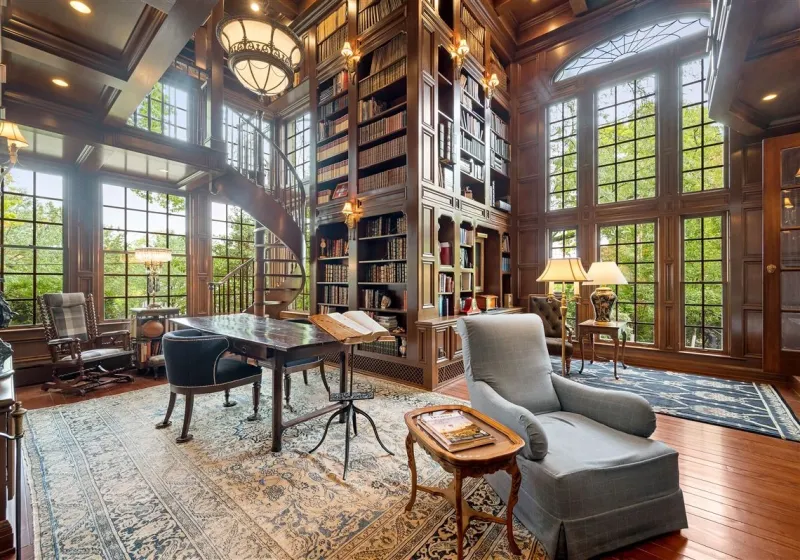
The Thinking Chamber: How America's Most Visionary Executives Are Designing Professional Spaces for Intellectual Mastery
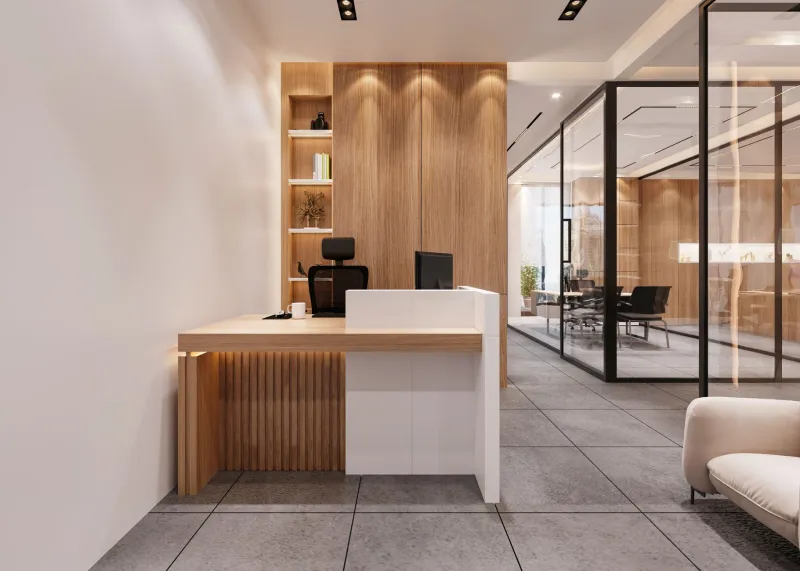
There is a particular quality of silence that cannot be purchased from a furniture catalog. It must be constructed — layer by deliberate layer — through the considered application of architecture, material science, and an almost philosophical commitment to the elimination of the superfluous. In the most consequential professional spaces in America today, that silence is precisely what is being built.
For a generation of elite executives, founders, and institutional leaders, the conventional corporate office has become an artifact of a lesser era. The open floor plan, the glass-walled conference room, the ambient hum of fluorescent lighting — these are the aesthetic signatures of organizations that have mistaken visibility for productivity and noise for vitality. The most discerning among the accomplished class have quietly drawn a different conclusion: that the quality of one's thinking is inseparable from the quality of one's environment.
The Architecture of Concentration
At the heart of this movement is a deceptively simple premise: space shapes cognition. Neuroscientific research has long suggested that environmental stimuli — acoustic, visual, thermal — exert measurable influence over the brain's capacity for sustained focus and creative synthesis. What distinguishes today's most thoughtfully designed executive spaces is not merely the acknowledgment of this principle, but its application with the rigor one would bring to any serious intellectual endeavor.
The architects and interior designers commissioned for these projects speak of their work in terms that would be at home in a philosophy seminar. Proportions are calibrated not for visual drama but for psychological ease. Ceiling heights are selected to encourage expansive thinking without inducing the vague anxiety of excessive volume. Natural light is admitted in quantities and at angles calculated to sustain alertness across the arc of a working day, without the harsh glare that fractures concentration.
Materials are chosen as much for their acoustic properties as their visual ones. Thick wool textiles absorb the frequencies that most agitate the nervous system. Solid wood surfaces — walnut, white oak, occasionally hand-planed stone — introduce a tactile warmth that grounds the occupant without demanding attention. The finest of these spaces feel, upon entering, as though the air itself has been refined.
Sound as Architecture
If spatial proportion is the skeleton of the thinking chamber, acoustic design is its nervous system. The most accomplished practitioners in this field approach sound not as an afterthought to be managed with panels and carpeting, but as a primary architectural element to be shaped from the earliest stages of design.
Double-wall construction, decoupled floor systems, and carefully engineered ventilation channels are among the technical instruments deployed in service of what one prominent New York-based acoustic consultant describes as "the achievement of a silence that feels active rather than dead." The distinction is critical. A room stripped of all sound can produce its own form of cognitive interference — an unnatural stillness that draws awareness to itself. The finest executive spaces achieve instead a quality of acoustic neutrality: an environment in which thought encounters no resistance.
Some of the most sophisticated commissions incorporate variable acoustic systems — panels and surfaces that can be adjusted to alter the room's reflective qualities depending on whether the occupant is engaged in solitary analysis, small-group deliberation, or the kind of extended, ruminative thinking that precedes the most consequential decisions. The office, in these hands, becomes an instrument as responsive as a concert hall.
The Discipline of Restraint
Perhaps the most telling characteristic of these environments is what they do not contain. The accumulated objects of professional achievement — the framed accolades, the commemorative photographs, the shelves populated with the artifacts of past transactions — are conspicuously absent. In their place, a studied emptiness that communicates something far more sophisticated than ambition: the confidence of a mind that requires no external validation.
This restraint extends to technology. Screens, where they appear at all, are concealed behind cabinetry or recessed into surfaces, summoned only when necessary and returned to invisibility when their purpose is served. Charging cables are routed invisibly. The visual field, in the most considered of these spaces, offers the eye nowhere to rest except on the quality of the materials themselves — and, ultimately, nowhere to wander except inward.
This is not asceticism for its own sake. It is the application of a rigorous editorial intelligence to the physical environment — the same intelligence that distinguishes a masterfully edited manuscript from an undisciplined first draft. Every element present has earned its place. Every absence is intentional.
The Private Sanctuary Within the Institution
What makes this phenomenon particularly notable is its emergence within institutional contexts that would seem, on the surface, to resist it. These are not the retreats of solitary artists or the studies of retired scholars. They are the working offices of individuals who lead organizations of consequence — investment firms, technology companies, philanthropic institutions, legal practices of the highest order.
The deliberate creation of a space for profound thinking within the architecture of a functioning enterprise represents, in this sense, a statement of values as much as a design choice. It asserts that the highest contribution a leader can make to an organization is not the performance of busyness, but the cultivation of genuine intellectual clarity. That the most valuable hours in a working day may be those spent in stillness, turning a problem over with the unhurried attention it deserves.
Several of the designers and architects engaged in this work describe their clients as executives who have arrived, through experience, at a conviction that most consequential errors in judgment originate not from insufficient information, but from insufficient reflection. The thinking chamber is, in this reading, a corrective — an architectural argument against the tyranny of the immediate.
A New Standard of Professional Distinction
As this sensibility spreads through the upper reaches of American professional life, it is beginning to reshape expectations more broadly. The request for acoustic consultants on executive office projects has increased substantially in recent years. The demand for spaces that prioritize what designers call "cognitive hospitality" — environments that actively support the mental processes of their occupants — is being articulated by clients who would not have known to ask for it a decade ago.
What distinguishes the finest examples of this emerging typology is not their cost, though they are invariably expensive, nor their visual drama, which they largely forgo. It is the quality of the experience they produce: the particular, almost physical sensation of entering a space that has been designed, at every scale, to honor the act of thinking.
In an era that has commodified distraction and monetized noise, that sensation may be the most genuine luxury of all.