Living With Masterworks: The Rise of the Private Collection as Personal Institution
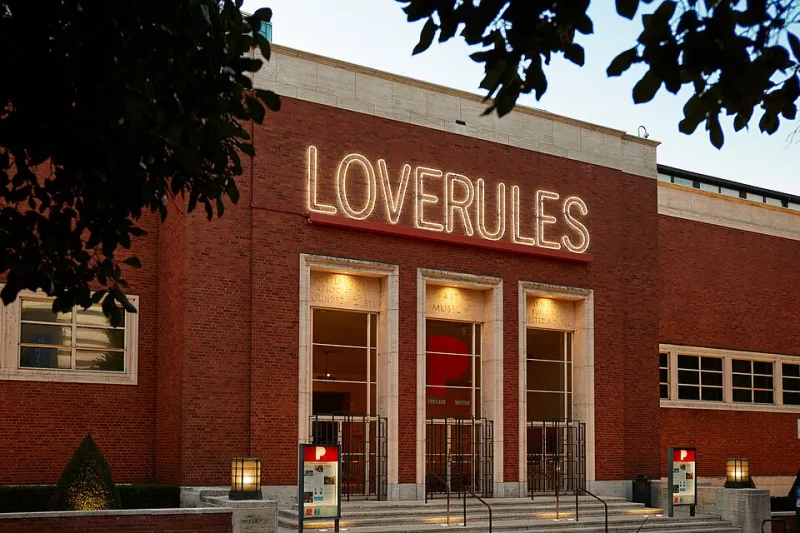
Photo: Cjongcampbell, CC BY-SA 4.0, via Wikimedia Commons
The temperature in the lower level of a certain Connecticut estate holds at precisely sixty-eight degrees Fahrenheit, year-round. Relative humidity is maintained between forty-five and fifty-five percent, monitored by sensors that log readings every quarter hour and alert a conservator in New Haven if any variable drifts beyond its prescribed range. The lighting is ultraviolet-filtered, timed, and calibrated to the spectral requirements of individual works. A catalog of some three hundred objects—drawings, paintings, and decorative arts spanning four centuries—is maintained in a database that would be recognizable to any registrar at a major American museum.
The family who lives here does not work in the museum field. They are, by profession and by inclination, collectors. But the distinction between what they have created and a small, serious institution of art has become, in practical terms, almost philosophical.
Across the United States, a remarkable and largely undiscussed transformation is reshaping the relationship between private wealth and personal collecting. America's most discerning collectors—of contemporary art, rare manuscripts, vintage automobilia, antique textiles, historic photography, and a dozen other specialized fields—are building not merely collections but systems of care that rival, and in some cases surpass, the professional standards of established cultural institutions. They are hiring curators, conservators, archivists, and registrars. They are commissioning bespoke storage and display environments engineered to museum specification. They are, in the most considered sense of the phrase, becoming stewards of culture.
The Architecture of Stewardship
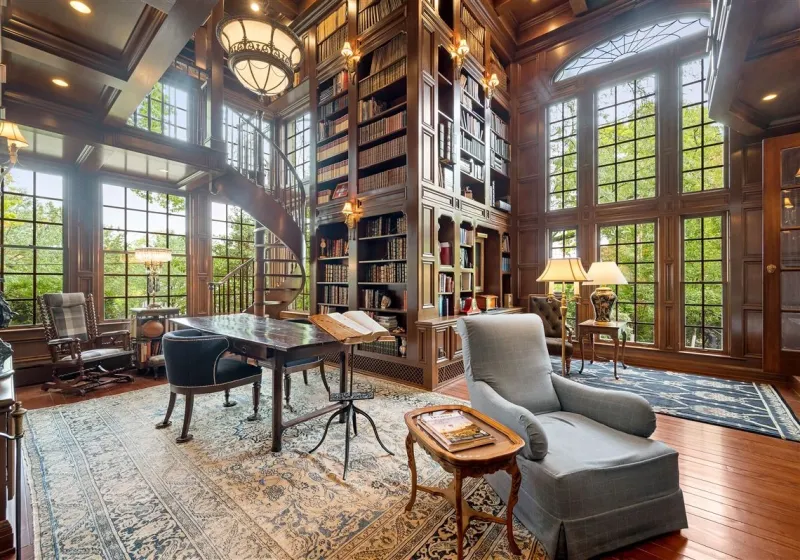
The physical spaces that house these collections have become, in themselves, a new frontier of residential architecture and interior design. The conventional art wall—however well-chosen the works upon it—is no longer the aspiration of the serious private collector. What is emerging instead is something considerably more intentional: dedicated gallery spaces designed from the ground up with the specific environmental, structural, and aesthetic requirements of the collection in mind.
Architects who specialize in this work—a small but increasingly sought-after group practicing from New York to Los Angeles—describe commissions that bear little resemblance to conventional residential projects. Clients arrive not with mood boards but with conservation reports, catalog entries, and letters from curators outlining the particular vulnerabilities of specific works. The design process is as much scientific as aesthetic, governed by the requirements of the objects themselves.
Natural light, long prized in residential architecture, is managed with considerable sophistication in these environments. Skylights are fitted with variable glazing systems that modulate UV transmission across the course of the day. Walls are finished in materials tested for off-gassing. Floor systems are engineered to absorb vibration. HVAC infrastructure is designed redundantly, with backup systems capable of maintaining environmental stability through extended power interruptions.
For collections that include works on paper—rare books, manuscripts, drawings, archival photographs—the standards are more exacting still. Dedicated vaults with independent environmental controls, archival-quality housing materials, and restricted-access protocols are becoming standard features of the most serious private collecting environments in America.
The Professional Household
If the architecture of the serious private collection has grown more institutional, so too has the professional staff that supports it. The employment of a personal curator—once an eccentricity associated with the grandest Gilded Age households—has become a considered and increasingly common arrangement among collectors of significant depth and ambition.
These are not decorative appointments. Private curators working in American collecting households today are typically credentialed professionals with advanced degrees in art history, museum studies, or a specialized field relevant to the collection. They manage acquisition research, maintain catalog records, coordinate with conservators and scholars, organize loans to institutional exhibitions, and serve as the collector's primary intellectual interlocutor in the ongoing development of the collection's scope and direction.
Conservators are engaged on retainer or project basis, conducting condition assessments, treating works that require intervention, and providing guidance on the environmental standards required to preserve specific materials over time. Archivists manage documentary collections—the correspondence, invoices, exhibition records, and provenance files that constitute the paper history of a serious collection and are, increasingly, understood as part of its value and integrity.
Some households have gone further still, engaging what might be described as a collection manager: a professional responsible for the day-to-day operational oversight of the collection as a whole—coordinating staff, managing insurance and transport logistics, overseeing photography and digital catalog maintenance, and ensuring that the physical environment remains within prescribed parameters at all times.
The Private Docent Experience
Perhaps the most culturally significant development in this landscape is the emergence of the private docent-led experience as a form of sophisticated hospitality. A number of serious American collectors have begun offering guided encounters with their collections to small groups of carefully selected guests—scholars, fellow collectors, curators, artists, and friends with genuine intellectual engagement in the relevant field.
These are not parties at which art happens to be present. They are curated experiences, structured around a particular theme, period, or question that the collection illuminates in some distinctive way. A collector of American modernism might organize an evening around the specific influence of European emigré artists on the New York School in the 1940s, with works drawn from the collection that speak directly to that argument. A collector of rare scientific instruments might guide a small group through the epistemological history of measurement, using objects from the seventeenth through nineteenth centuries to animate what would otherwise be an abstract intellectual narrative.
The effect of these gatherings—intimate, knowledgeable, grounded in genuine objects of quality and significance—is difficult to replicate in any institutional setting. The scale is human. The conversation is unguarded. The relationship between the collector and the collection is visible in a way that no museum label or audio guide can convey. For guests who are themselves serious people, the experience is frequently described as among the most memorable forms of hospitality they have encountered.
Legacy as Design Problem
Underlying all of this infrastructure—the climate-controlled galleries, the professional staff, the cataloging systems, the private programs—is a question that serious collectors increasingly find themselves confronting with unusual directness: what happens to all of this after them?
The disposition of a significant private collection is one of the more complex problems in American cultural philanthropy. Museums are selective and their acquisition priorities are not always aligned with the strengths of a given collection. Foundations require governance structures and endowments. Family stewardship depends on the interests and capacities of succeeding generations, which cannot be assumed.
The collectors who have built the most rigorous institutional infrastructure around their holdings are, almost without exception, those who have thought most carefully about this question. The catalog, the conservation records, the provenance files, the photographic archive—all of this documentation not only serves the collection in the present but positions it for an intelligent future, whatever form that future ultimately takes.
In this sense, the most serious private collectors in America today are engaged in something that transcends the pleasure of acquisition, however refined that pleasure may be. They are constructing, object by object and system by system, an argument about what deserves to be remembered—and building, with considerable care and considerable resources, the conditions under which it might be.